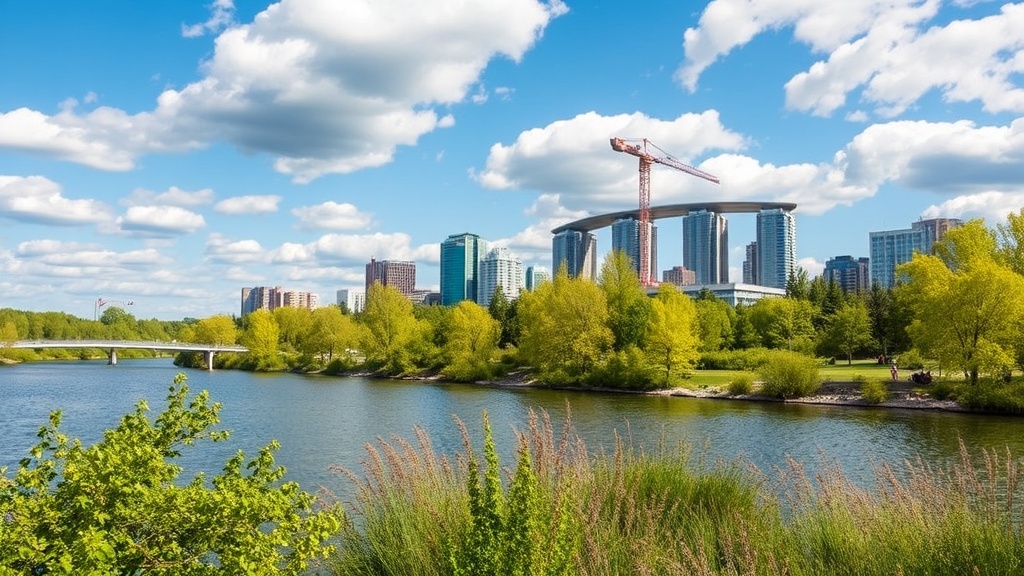
Bois-des-Filion's Riverside Parks: A Local's Complete Guide to Outdoor Spaces

Bois-des-Filion's riverside parks offer some of the most inviting outdoor spaces in the region — green corridors along the Rivière des Mille Îles where residents walk their dogs, launch kayaks, and watch the sunset paint the water orange. This guide maps every accessible park and green space along the riverfront, complete with what you'll find at each spot, when to visit, and how locals actually use these places year-round.
What Parks Line the Riverfront in Bois-des-Filion?
The city maintains three distinct riverside parks between the eastern boundary at Boulevard du Japon and the western edge near Avenue des Perron. Each serves a different purpose — some designed for active recreation, others for quiet contemplation.
Parc de la Rivière-des-Mille-Îles sits at the heart of the waterfront (accessible from Place du Curé-Labelle). This is the flagship space — wide manicured lawns, a proper boat launch for small craft, and the Maison du Citoyen within walking distance. On summer Saturdays, you'll spot the local kayak club gathering here. The parking lot fills by 10 a.m. on hot weekends, so arrive early.
Parc des Bâtisseurs occupies the eastern stretch near the intersection of Boulevard du Japon and Boulevard Adolphe-Chapleau. It's quieter — more trees, less open field. The shaded walking path runs parallel to the water for nearly 800 meters, making it the preferred route for morning joggers and dog walkers from the surrounding residential streets.
Parc du Moulin — technically just inside the municipal boundary near Avenue des Perron — features the historic mill site and the most dramatic river views. The water moves faster here, creating small rapids after rainfall. It's not officially a swimming spot, though teenagers ignore this in July.
Which Park Suits Your Activity?
Not all green spaces accommodate every use. Here's how they compare:
| Park | Best For | Facilities | Parking |
|---|---|---|---|
| Parc de la Rivière-des-Mille-Îles | Kayaking, picnics, events | Boat launch, restrooms, benches | Paved lot (25 spaces) |
| Parc des Bâtisseurs | Running, dog walking, shade | Walking path, waste stations | Street parking on du Japon |
| Parc du Moulin | Photography, quiet reflection | Historical markers, viewpoints | Limited — walk or bike |
The catch? Parc du Moulin has no winter maintenance. Once snow falls, the paths become impassable without proper boots. Parc des Bâtisseurs gets plowed within 24 hours of significant snowfall — one reason it's the year-round choice for dedicated walkers.
What Activities Can You Actually Do Here?
Beyond the obvious (walking, sitting, staring at water), Bois-des-Filion's riverside parks support specific recreational pursuits that locals have refined over years.
Kayaking and paddleboarding. The boat launch at Parc de la Rivière-des-Mille-Îles accommodates small trailers. From here, you can paddle upstream toward the Îles-de-Berthier or downstream toward the open water near Île-Ronde. The current runs gentle in summer — though after spring melt, the river moves fast enough to challenge intermediate paddlers. Local outfitter Kaz Outdoor in nearby Terrebonne rents equipment if you don't own gear.
Fishing. The river holds walleye, northern pike, and smallmouth bass. Shore fishing works from the rocky outcrops at Parc du Moulin, though serious anglers prefer wading in from the boat launch. You'll need a Quebec fishing license — available online through the provincial government.
Bird watching. The riparian corridor attracts herons, kingfishers, and the occasional osprey diving for fish. Dawn offers the best viewing, particularly along the wooded sections of Parc des Bâtisseurs. Bring binoculars — the herons roost in the dead trees across the channel on Île-Ronde.
When Should You Visit Each Season?
Bois-des-Filion transforms through the year, and the riverside parks shift their character accordingly.
Spring (April–May): High water levels from snowmelt submerge portions of the lower paths. The parks stay muddy — wear proper footwear. That said, the returning songbirds and budding riverside willows make this the most visually interesting season. The annual city spring cleanup typically happens in late April, bringing volunteer crews to clear winter debris.
Summer (June–August): Peak usage. The city runs scheduled activities through the Maison du Citoyen — outdoor yoga sessions on Tuesday mornings, occasional evening concerts. Shade becomes premium real estate at Parc de la Rivière-des-Mille-Îles; the mature oaks at Parc des Bâtisseurs offer relief from afternoon sun.
Autumn (September–October): Locals' favorite. The sugar maples and red oaks along the waterfront turn spectacular colors reflected in the calm river. Cooler temperatures mean the paths empty out — you'll have Parc du Moulin nearly to yourself on weekday afternoons. Worth noting: the sunset moves southward, visible from benches that face blank walls in summer.
Winter (November–March): Ice transforms the parks. The river itself rarely freezes solid — the current keeps it open — but snow covers everything. Parc des Bâtisseurs maintains cleared walking paths. Cross-country skiers occasionally track parallel routes on the untrampled snow. The bare trees reveal houses across the river normally hidden by foliage.
What Should You Know Before You Go?
Practical details that aren't obvious from the city's website.
Bathroom access. Parc de la Rivière-des-Mille-Îles has seasonal restrooms — open roughly May through October, closed and locked in winter. The Maison du Citoyen (weekday business hours) offers the only reliable indoor facilities year-round. Plan accordingly.
Dog regulations. Leash laws apply everywhere, though enforcement varies. You'll see off-leash dogs at Parc des Bâtisseurs early mornings — technically against bylaws, but tolerated if under voice control. Waste bags appear at dispensers that locals refill voluntarily (they're often empty by Sunday evening).
Event closures. The city occasionally closes sections of Parc de la Rivière-des-Mille-Îles for private events — weddings, corporate functions, municipal ceremonies. No permanent signage warns of this; check the public notices page before planning a special visit.
Mosquitoes. The river wetlands breed them aggressively in June. The parks closest to the marshy inlets — particularly the eastern end of Parc des Bâtisseurs — become unusable after 5 p.m. without repellent. By mid-July, the population crashes and evenings become pleasant again.
How Do Locals Actually Use These Spaces?
The official descriptions don't capture the social reality. Here's the thing: each park has developed an unofficial character through years of habitual use.
Parc de la Rivière-des-Mille-Îles functions as the community's front porch. Teenagers congregate at the picnic tables after school. Retirees walk predictable morning loops, nodding to the same faces daily. The boat launch hosts an informal fishing derby every Sunday — no prizes, just bragging rights.
Parc des Bâtisseurs belongs to the fitness crowd. The shaded 800-meter straightaway attracts serious runners doing interval training. You'll recognize the regulars by their consistency — same time, same route, weather be damned. The path's crushed-stone surface beats asphalt for joint protection.
Parc du Moulin remains the outlier — the place residents bring out-of-town visitors to prove Bois-des-Filion possesses actual beauty. Photographers arrive at golden hour. Solitary readers occupy the single bench facing the rapids. It's where you go when you need to think, or when you want to forget you're twelve minutes from Highway 640.
The parks connect through something more official: the Réseau cyclable de Bois-des-Filion — the city's growing bike path network. From Parc de la Rivière-des-Mille-Îles, you can pedal west through residential streets toward the commercial corridor on Boulevard Adolphe-Chapleau, or east toward the boundary with Terrebonne. The routes aren't fully separated from traffic — shared lanes with painted markings — but traffic moves slowly and drivers generally accommodate cyclists.
Here's the truth about these spaces: they aren't spectacular by wilderness standards. You won't find granite cliffs or old-growth forest. What Bois-des-Filion offers instead is accessibility — the rare chance to stand beside moving water ten minutes after leaving your driveway, to hear birdsong over distant traffic, to remember that the river was here centuries before the houses arrived and will remain when they're gone. That proximity — that convenience of wildness within suburbia — explains why residents defend these parks so fiercely whenever development threatens the waterfront buffer.
Bring a coffee from Café Morgane on Boulevard du Japon. Walk slowly. Notice how the light hits the water differently at each park. This is how locals experience Bois-des-Filion — not as a destination, but as a daily practice.